February 23, 2026
How to Choose the Best eCommerce Analytics Tools in 2026
How to choose the best eCommerce analytics tools in 2026. Compare profit-first platforms, AI capabilities, SKU-level analytics and omnichannel insights.

eCommerce Operations
Thursday, February 19, 2026
Read our complete retail demand planning guide, specifically crafted to support operations teams in eCommerce businesses.
Retail growth is rarely limited by demand. It’s limited by execution. When a brand expands into new markets, launches new channels, or adds new fulfillment paths, the same core questions get harder to answer:
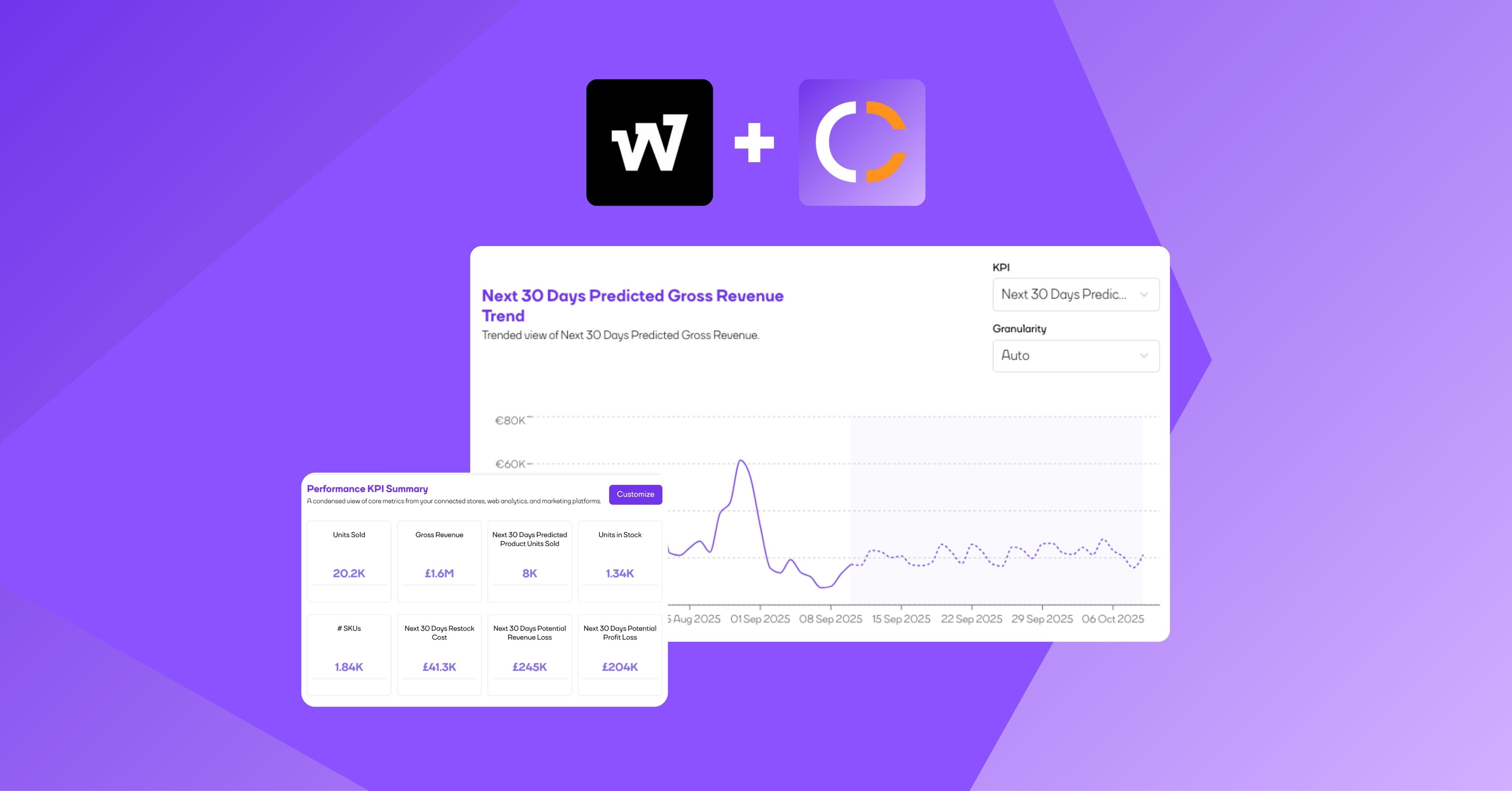
These are the exact problems that retail demand planning solves. In this article, we will break down what demand planning is, how it differs from forecasting, why it matters for growing brands, and a practical five-step approach operations teams can use to make planning reliable and repeatable. We will also cover what to look for in retail demand planning software, including how brands can leverage Conjura analytics and Wayflyer funding to scale into new markets.
Demand planning is the process of estimating future customer demand and turning that estimate into actionable plans across the business. For operations teams, demand planning connects the dots between:
A strong demand planning process is more than a spreadsheet with a single “forecast” number. It is a cross-functional workflow that helps the business make better decisions with imperfect information.
In practice, demand planning often combines:
For retail operations teams, the output is a set of choices about inventory, fulfillment, and spend, as opposed to an estimate or forecast number.
These terms are often used interchangeably, but they are not the same.
Demand forecasting is the act of predicting future demand. It typically produces a time-based estimate like:
Forecasting is essential. But a forecast alone does not tell you what to do next.
Download Wayflyer’s cash flow forecast to help with financial planning.
Demand planning takes forecasts and turns them into operational actions while accounting for real-world constraints, such as:
It’s possible to have a good forecast and still run out of stock if the plan does not reflect lead times, inbound delays, or allocation rules. Demand planning is where the forecast becomes execution-oriented.
Modern forecasting tools, including Conjura’s AI forecasting, can be a major upgrade versus manual forecasting. AI can help operations teams:
But forecasting is still one part of a broader retail demand planning workflow. The best outcomes occur when forecasting is paired with strong operational execution and the ability to fund growth decisions confidently.
Growing brands face a planning challenge that is both operational and financial: as you scale, the cost of mistakes increases.
Here is what demand planning helps operations teams protect and improve:
Stockouts do not just lose one order. They can:
For fast-growing brands, stockouts often happen during the exact periods when demand spikes, which makes the impact worse.
Overbuying is not harmless. Excess inventory can:
Demand planning helps you buy and move inventory with more confidence, especially across multiple regions or warehouses.
When you expand into new markets, shipping becomes more complex:
Demand planning supports smarter placement and replenishment decisions, which can reduce late deliveries and shipping costs.
Operations teams often struggle with reporting that answers questions like:
A consistent demand planning process improves the quality of inventory and warehouse reporting, and makes it easier to align on one set of numbers.
Below is a practical, repeatable demand planning workflow designed for operations teams. It scales from early-stage brands to multi-market growth.
Start with what actually happened, then decide what should be treated as “normal.”
Key actions:
Pitfall to avoid: treating stockout periods as “low demand.” If you were out of stock, demand may have been higher than sales show.
Operations teams should not forecast in a vacuum. Incorporate planned and external drivers.
Examples of demand drivers:
Output: a demand view that explains key assumptions, not just a number.
Not every SKU deserves the same modeling effort. The goal is accuracy where it matters most.
A practical approach:
If you use a tool like Conjura’s AI forecasting, this step becomes faster and more scalable, especially when you have many SKUs, multiple markets, and complex seasonality.
This is where demand planning becomes operational.
Key inputs:
Key outputs:
Pitfall to avoid: planning only for the “average” case. Operations teams should plan for variability, especially in inbound timing and demand spikes.
Demand planning is not a quarterly exercise. It should be a living process.
A strong operating rhythm includes:
The goal is continuous improvement: reduce surprise, improve accuracy, and make the plan more resilient.
As brands scale, spreadsheets tend to break first in three areas: time, trust, and complexity. Retail demand planning software can help, but only if it matches how operations teams actually work.
1. Forecasting that adapts quickly
Look for forecasting that can handle:
This is where AI forecasting can shine.
2. Inventory visibility and reporting
Demand planning software should support:
3. Scenario planning
Operations teams need to answer “what if” questions fast:
4. Workflow and accountability
The best system is the one teams actually use. Look for:
When scaling into new markets, operations teams often need two things at the same time:
That is where Conjura and Wayflyer offer the most power.
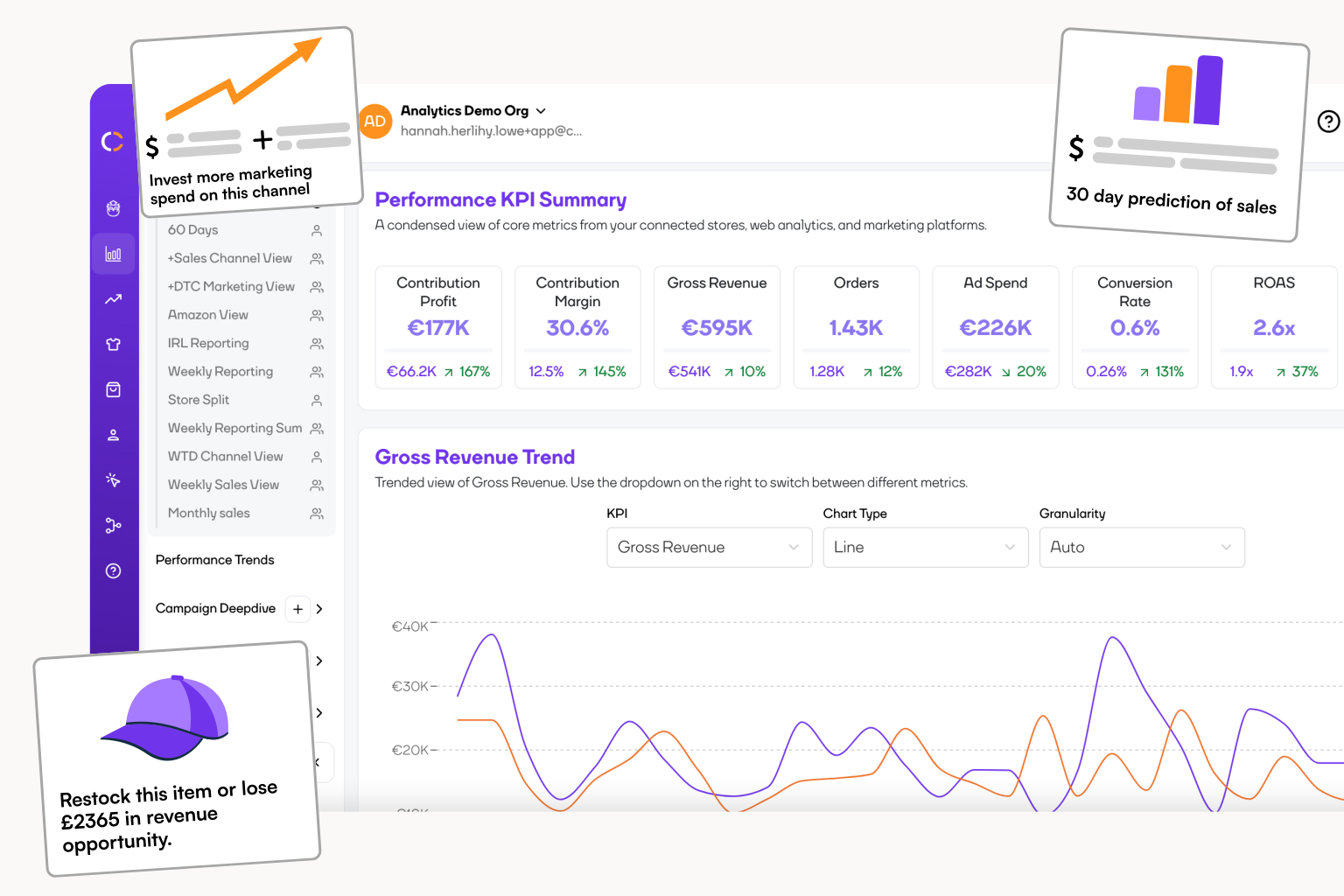
Conjura helps operations teams turn data into forward-looking insight, including forecasting capabilities like AI-driven forecasting. With better demand visibility, teams can:
Even the best plan can fail if you cannot execute it quickly. Wayflyer can help growing brands access the funding needed to:
Together, Conjura and Wayflyer help operations teams bridge the gap between:
For teams focused on shipping performance, inventory health, and warehouse reporting, this combination can help turn demand planning into a growth lever, not just a reporting task.
Retail demand planning helps operations teams predict demand, translate forecasts into actionable inventory decisions, and run a tighter supply chain as the brand grows. The difference between demand planning and forecasting is simple: forecasting predicts, demand planning executes.
If your brand is expanding into new markets and your operations team needs better forecasting, clearer inventory reporting, and the ability to move quickly, consider pairing:
Want to see how Conjura + Wayflyer can support your growth plan? Talk to the teams to learn how forecasting and funding can work together to help you scale into new markets with confidence.
Discover the latest eCommerce guides, articles and tips to help your brand grow.
Book A Demo
Book a demo with one of our team to discover the power of Conjura and how it can transform your business.
Revenue Increase
"I’m a big fan of Conjura and there’s so much more for us to keep getting from it.”
Kayla Wilson, Marketing Director @ Furniturebox

Explore the
Platform


plans
Get Started
plans
plans


Explore
Conjura


Unlock eCommerce performance data and gain insights that drive profit.
